
PRFCT Earth Project
The Perfect Earth Project is based in Bridgehampton and is a excellent resource for understanding and achieving nature-based, toxic-free land care. Read on to see their most recent article Closing the Loop in their newsletter. For more information on PRFCT Earth, click here.
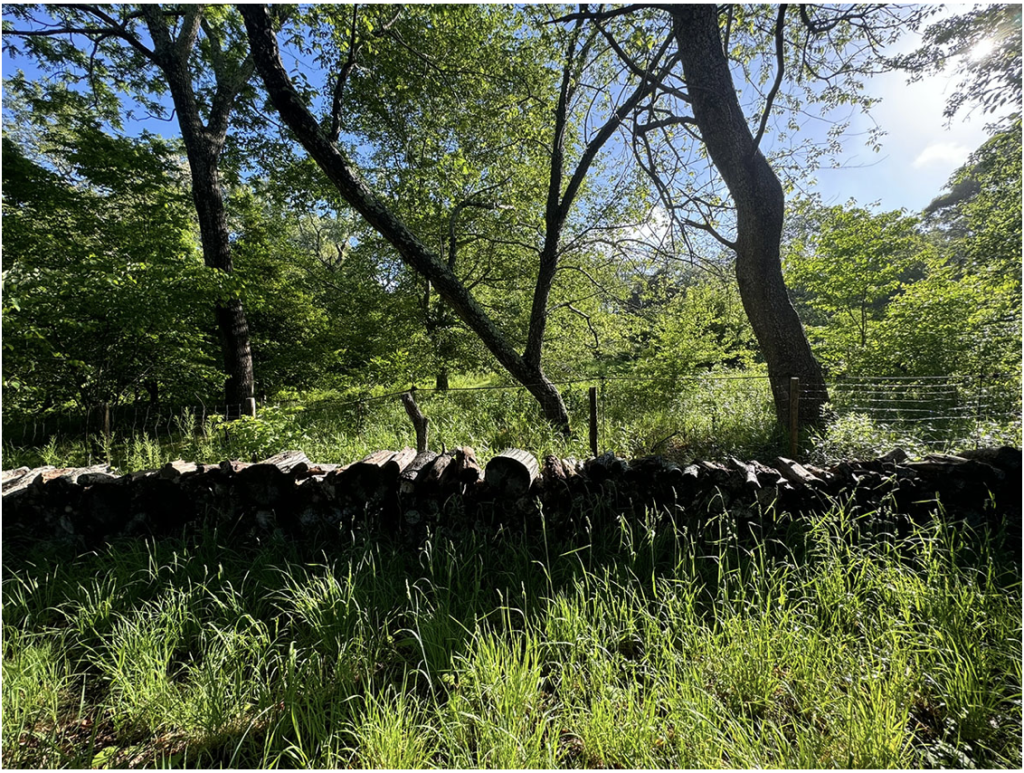
If a tree falls or must come down for safety reasons, chop it up into logs and create a log wall by stacking them. They will provide habitat for critters like snakes (who eat voles and mice!), chipmunks, and native bees. This log wall at Edwina von Gal’s Marshouse sits in front of a woven metal deer fence that surrounds a section of her property. She uses the space in between the wall and the fence to stash twigs and other biomass.
Nature is resourceful. It doesn’t pay for mulch or fertilizer or hire a team to blow away leaves. It doesn’t bag up grass clippings and send them to the landfill. And it doesn’t chop down dead trees or branches and truck them away. It makes everything it needs and uses everything it makes. Leaves feed insects and other wildlife. Insects feed birds. Dead leaves and trees feed the soil. And the soil feeds the plant. And on and on it goes. Nothing is “waste,” and nothing goes to waste. It’s a perfect cycle—one that has worked for millennia. When caring for your yard ask yourself: What Would Nature Do (WWND)? And then follow its lead. One simple way to do this is to “close the loop,” says Edwina von Gal, founder of Perfect Earth Project. “Let nothing leave your property and bring nothing in—except for plants.” You’ll save money, reduce fossil fuel use, provide essential habitat for biodiversity, support the ecosystem the way nature intended, and have fun.
“What if you gave half your lawn back to nature . . . and made the other half healthy and safe?”